
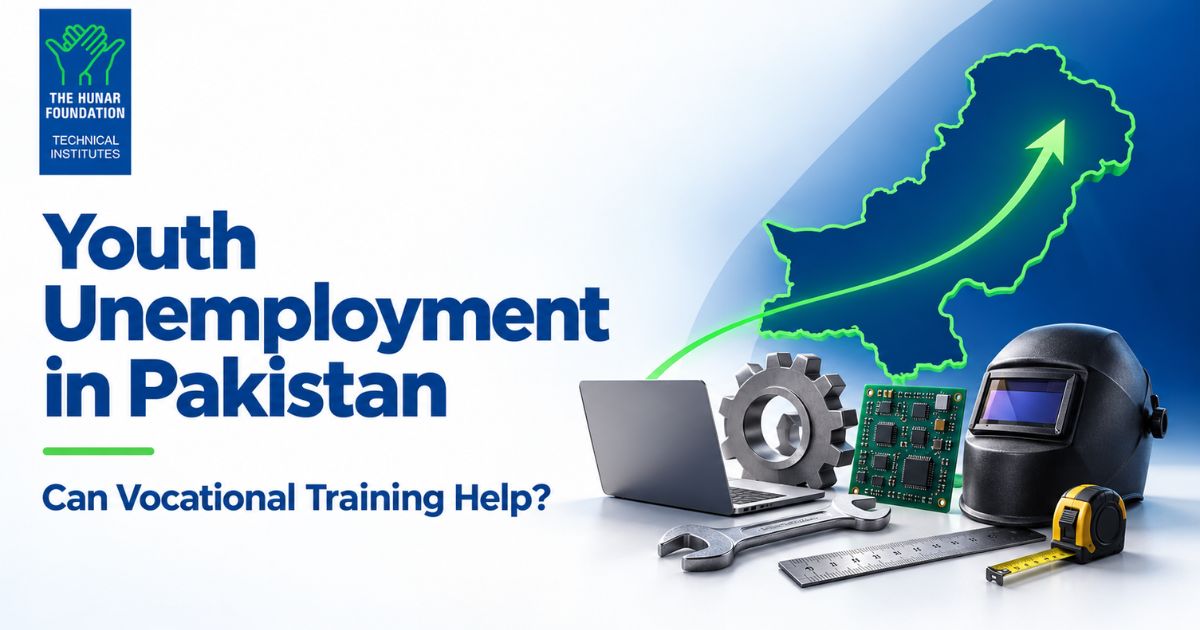
It is difficult for young people to begin their careers even if they have a qualification, since they lack practical experience, job-ready skills, or access to good opportunities.
According to Pakistan’s Labour Force Survey 2024-25, the overall unemployment rate is 7.1%, but youth unemployment is about 12.8%. This difference shows that unemployment is not only about whether young people want to work. It also depends on their skills, experience, and access to opportunities.
Understanding Youth Unemployment in Pakistan
Youth unemployment in Pakistan means young people who are willing and able to work but cannot find a job. It does not count every young person without a job, since students who are not looking for work are not part of the labour force.
The main challenge is matching work experience, opportunities, and skills with available jobs. The latest Pakistan Labour Force Survey says that 12.5% of young people aged 15 to 24 in the labour force are unemployed. In other words, about 1 in every 8 young people who are working or looking for work cannot find a job.
What Are the Causes of Unemployment in Pakistan?
Skills Mismatch Between Education and Jobs
While a qualification indicates one has received an education, employers also want people who are able to carry out particular tasks; it is possible for someone to understand electrical theory but still have no experience in using tools, carrying out safety checks, or identifying faults.
This gap contributes to the causes of unemployment in Pakistan.
Limited Access to Employment Opportunities
A capable young person still needs a job or income, and access can vary by city, sector, transport, networks, and job information.
Lack of Practical and Job-Ready Skills
Most beginner positions call for practical experience rather than merely having knowledge. Before students go into the workplace, they need chances to practice handling equipment, using software, communicating with customers, carrying out safety procedures, and solving problems.
Experience Requirements for Entry-Level Jobs
Young people looking for jobs may find themselves in a situation where employers request experience, but those who are just starting out need their first opportunity in order to obtain it. Supervised practice, workplace exposure, and on-the-job training can break this cycle.
How Can Vocational Training Help Reduce Youth Unemployment?
Building Job-Ready Technical Skills
Vocational training should teach individuals how to carry out a job, and examples of such training include electrical work, welding, plumbing, machining, hospitality, healthcare support, automotive work, and digital services.
Developing Digital Skills
Today’s job market also demands digital skills. Young people may find opportunities in:
- E-commerce
- Digital marketing
- Graphic design
- Office software
- Data tools
- Freelancing
- Online services
NAVTTC’s current programmes include AI, Power BI, e-commerce, freelancing, graphic design, and digital marketing, alongside traditional technical trades.
Strengthening Soft Skills
A technically capable worker needs communication, teamwork, punctuality, responsibility, and problem-solving. Training can build these habits through workplace-style tasks.
Providing Practical Work Experience
Repeated practice helps learners correct mistakes in a controlled environment before they perform tasks for customers or employers.
Connecting Training With Industry Needs
Training works better when employers help shape it. NAVTTC develops and updates curricula with industry experts and aligns occupational standards with employer requirements.
Improving Employability of Young People
Employability includes technical ability, communication, reliability, adaptability, and the confidence to demonstrate skills during an interview or practical test.
Supporting Self-Employment and Entrepreneurship
Some skills can support independent earning. An electrician can take private jobs, a dressmaker can serve customers from a small setup, and a digital specialist can provide services to businesses. Learners also need basics such as pricing, budgeting, marketing, and customer service.
Vocational Training in Pakistan: From Skills to Employment
Practical Learning for In-Demand Trades
Vocational training in Pakistan covers many technical, service, and digital occupations. Students should ask whether a course provides enough practice and connects with realistic employment or income opportunities.
Industry-Relevant Technical Training
Industry relevance needs suitable equipment, current teaching methods, competent instructors, and practical assessments. NAVTTC links qualification development with labour-market demand and industry participation.
Developing Workplace and Soft Skills
Technical training also prepares students for everyday work through communication, teamwork, punctuality, safety, problem-solving, and professional conduct.
Creating Pathways to Employment and Entrepreneurship
Training becomes more useful when learners understand what happens after graduation. Career counselling, employer interviews, internships, job fairs, placement support, and entrepreneurship guidance can create clearer next steps.
Can Vocational Training Alone Solve Youth Unemployment?
No. Unemployment in Pakistan has several causes, so no single intervention can solve it. Practical training can improve employability and create routes into work or self-employment, but it cannot create every job young people need.
Reducing unemployment in Pakistan also requires job creation, business and industry growth, career guidance, accessible training, investment, and stronger links between education and labour-market demand. Training providers must update programmes as industries change.
The opportunity comes from combining skills with jobs, industry partnerships, career support, and economic growth.
How Can Pakistan Strengthen Vocational Training for Youth?
Align Training With Labour Market Demand
Providers should use employer and labour-market information to update courses, equipment, assessments, and instructor training.
Expand Access to Quality Training
Young people need accessible, understandable training they can complete. Access also matters for women and learners facing transport, location, or information barriers.
Strengthen Industry Partnerships
Employers can contribute through apprenticeships, visits, assessments, internships, and recruitment. Their input keeps training relevant.
Include Entrepreneurship and Career Support
Students need guidance after graduation. Career counselling can explain job pathways, while entrepreneurship support can cover customers, pricing, and costs.
Improve Access to Practical Training
Hands-on learning needs functioning equipment, safe workshops, trained instructors, and enough practice time.
How THF Supports Skills Development in Pakistan
At The Hunar Foundation, we help young people move from learning a skill to using it in the real world. Our technical courses cover welding, machining, plumbing, automotive work, hospitality, healthcare, dressmaking, and hair and beauty services. We also offer advanced technology courses, including digital marketing, web development, graphic design, and data-related training.
THF has more than 55,000 graduates, 77% of whom are economically engaged, and collaborates with more than 700 industrial partners.
Through the Emerge Incubation Centre, we also help eligible THF vocational graduates explore entrepreneurship and build business knowledge around their skills.
Conclusion
Youth unemployment won’t decrease just because more people finish courses; young people need relevant skills, some practical experience, access to employers, and an economy which provides productive opportunities.
As part of the broader initiative to reduce unemployment in Pakistan, acquiring a practical skill can give a young person another way to get a job. While it does not ensure they will get one, it gives them something valuable to show and build on.