
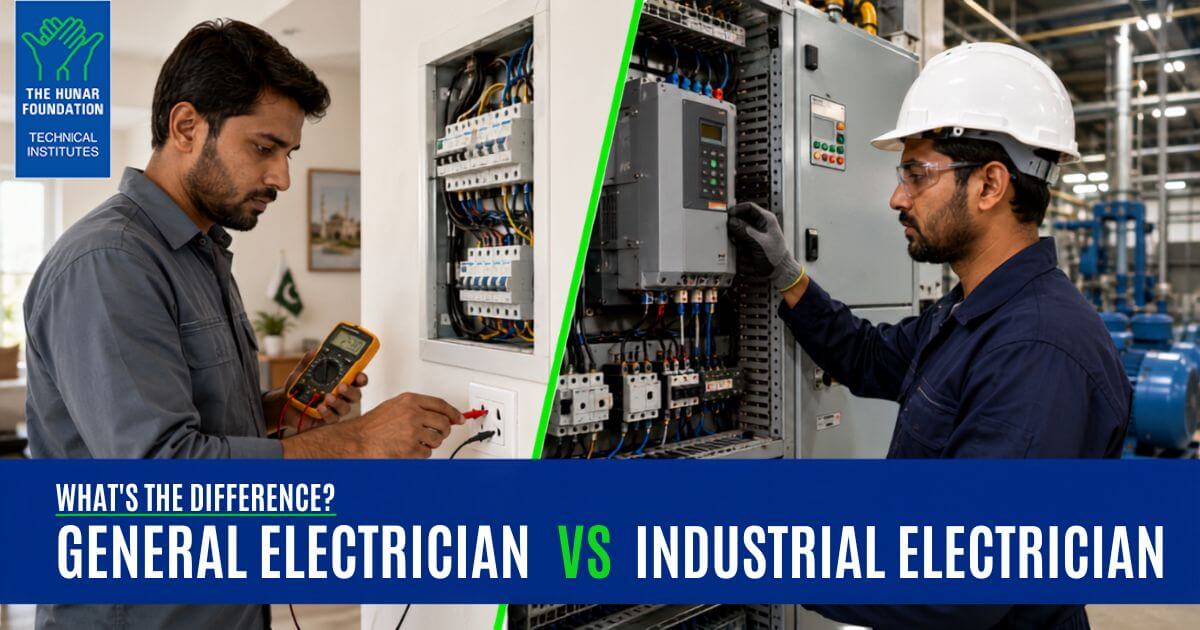
There are numerous career paths within the electrical field, but choosing the right one can be confusing. A major question that all aspiring electricians have is: What is the difference between a general electrician and an industrial electrician? Although both occupations relate to electrical systems, they have different work settings, duties, and technical skills.
The demand for skilled electricians is increasing in Pakistan due to the expansion of the construction, manufacturing, and infrastructure industries. So, learning about these two career paths can help you select the one that suits you best and your future goals.
At The Hunar Foundation (THF), we help learners develop practical electrical skills through hands-on training that prepares them for real workplace requirements.
Who Is a General Electrician?
A general electrician installs, repairs, and maintains electrical systems used in homes, offices, schools, hospitals, and commercial buildings. They ensure that electrical wiring, fixtures, and equipment operate safely and efficiently.
In general, this role focuses on everyday electrical work rather than complex industrial machinery. It is often the first step for individuals who want to build a career in the electrical trade.
Key Responsibilities of a General Electrician
- Installing wiring, switches, sockets, and distribution boards
- Repairing electrical fixtures and household appliances
- Following safety codes in installation and repair work
- Estimating material costs from basic wiring layouts
Skills and Training Required
As a general electrician, it’s important to have both technical skills and hands-on experience in the field. Some basic general electrician skills are knowledge of electrical safety, hand tools, basic wiring diagrams, and calculating electrical loads.
In addition, strong communication and teamwork skills help them work effectively with supervisors and clients.
For beginners, electrician courses in Pakistan provide structured training that combines classroom learning with hands-on practice. At THF, the National Vocational Certificate Level 2 in Electrical Technology introduces learners to electrical basics, workplace safety, electrical calculations, domestic wiring, and practical installation projects. The program welcomes learners after Matric or Middle and prepares them for entry-level careers in the electrical field.
Who Is an Industrial Electrician?
An industrial electrician works in an industrial setting, such as a factory, manufacturing plant, engineering firm, or other industrial facility. They install, maintain, and troubleshoot large electrical equipment used in industrial production rather than working on household wiring.
In Pakistan, the importance of skilled industrial electricians is growing as industries are embracing advanced technologies.
Key Responsibilities of an Industrial Electrician
- Installing and maintaining industrial motors, panels, and control systems
- Testing and troubleshooting electrical circuits and control equipment
- Working with PLCs and power distribution systems
- Performing preventive industrial electrical maintenance to avoid plant downtime
Skills and Training Required
Advanced technical skills are needed for industrial electrical work. Students study motor installation, industrial wiring, electrical control systems, testing and troubleshooting techniques. In addition, they learn about programmable logic controllers (PLC), power electronics, grounding, and industrial safety.
Through 6-month industrial electrician training, we help you develop these skills. The program is made up of 18 modules and can lead to employment in a wide range of manufacturing, automotive workshop, textile, engineering, shipbuilding, and infrastructure-related industries.
General Electrician vs Industrial Electrician: Key Differences
Understanding the difference between a general electrician and an industrial electrician becomes much easier when you look at their daily work, technical responsibilities, and career opportunities.
Work Environment and Setting
A general electrician mostly works in homes and small commercial buildings. An industrial electrician works inside factories and construction sites where equipment runs at a much larger scale.
Scope of Work and Equipment Handled
General electricians work with wiring, switches, and household appliances. However, industrial electricians work with motors, control panels, transformers, and automated machinery.
Salary and Career Growth Potential
The electrician career scope is very high in Pakistan, and these roles can provide better salaries as they demand specialized technical skills and use more complex industrial equipment. According to Indeed Pakistan, GE and IE are currently earning an average of PKR 38,700 and PKR 53,600 per month, respectively.
Quick Comparison Table
| Factor | General Electrician | Industrial Electrician |
|---|---|---|
| Work Setting | Homes, offices, small businesses | Factories, plants, construction sites |
| Equipment | Wiring, switches, appliances | Motors, PLCs, transformers, control panels |
| Training Length | Around 6 months | Around 6 months, more technical depth |
| Average Salary | Approx. PKR 38,000/month | Approx. PKR 55,000/month |
| Entry Point | Matric/Middle | NVCL-2 General Electrician |
| Career Path | Building or Domestic Electrician | Industrial Electrician, PLC Technician, Electrical Supervisor |
Knowing the difference between a general electrician and an industrial electrician can enable you to select the electrical training pathway that will suit your interests and future career aspirations.
Which Path Is Right for You?
Choosing between these careers depends on your interests and where you see yourself working in the future. Although both paths require technical knowledge and practical skills, they lead to different work environments and career opportunities.
A general electrician may be the right choice if you enjoy:
- Installing and repairing electrical systems in homes and commercial buildings
- Working on different projects at various locations
- Building a strong foundation in electrical work
An industrial electrician may suit you better if you enjoy:
- Working with large machines and industrial equipment
- Addressing manufacturing technical issues
- Learning to control and manage advanced electrical systems and automation
Whichever path you choose, developing the right technical and practical skills is essential for a successful career in the electrical industry.
How THF Prepares You for a Career as an Electrician
At THF, we offer practical training for both general and industrial electrical careers. Beginners can start with the six-month General Electrician program, while learners with an NVCL-2 General/Domestic Electrician qualification can progress to the six-month Industrial Electrician program.
Both programs combine on-campus learning with hands-on practice, covering the skills learners need for real workplace settings. After successful completion, learners receive an NBTPE Certificate along with a THF In-house Certificate.
Conclusion
The decision between the two careers depends on the type of work you prefer to do and your desire to advance technically. Both of these are viable, stable career paths, and we provide structured training for electrician certification in Pakistan.