
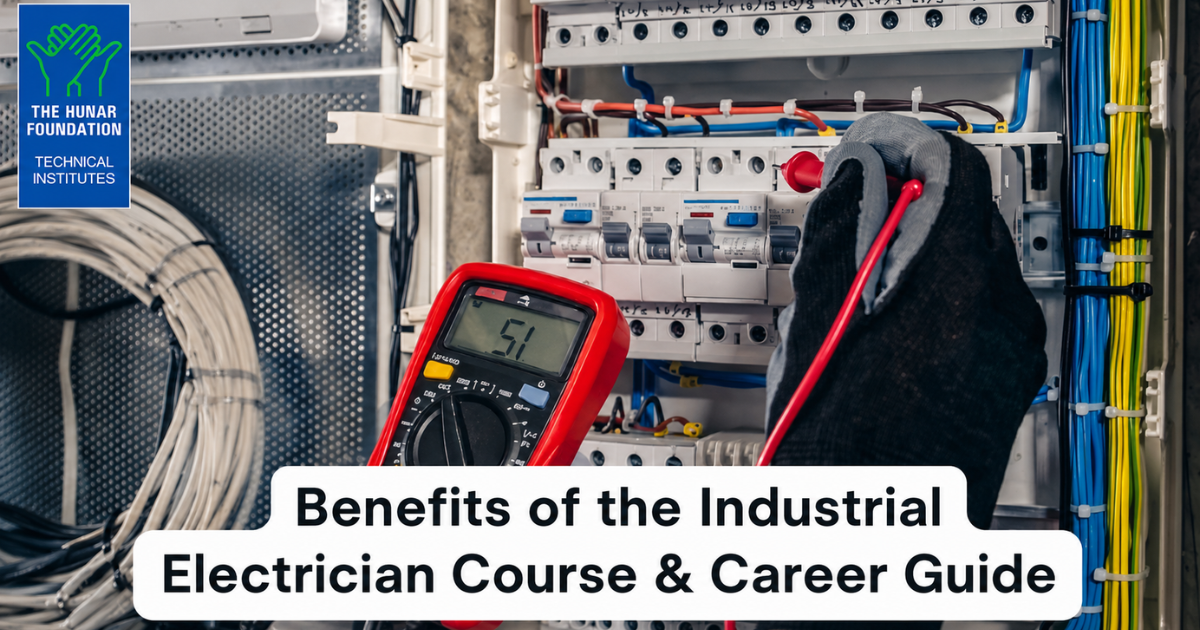
Every factory, every hospital, every large building in Pakistan runs on electrical systems. Someone has to install those systems. Someone has to maintain them. Someone has to fix them when they stop working. That someone is an industrial electrician. This is one of the most in-demand trades in Pakistan right now. Yet most young people do not even consider it as a career path. They either do not know enough about it, or they think getting into this field requires years of expensive education. Neither is true.
This guide breaks down exactly what this career involves, what skills you need, and how you can get started without spending a fortune.
What is an Industrial Electrician?
An industrial electrician works with electrical systems in factories, plants, and large industrial buildings. They install wiring, set up control panels, maintain electrical equipment, and make sure everything runs safely and correctly.
This is different from a regular household electrician who fixes a fan or changes a switchboard at home. Industrial electricians work at a much larger scale. They deal with heavy machinery, motors, and complex electrical setups that power entire production floors.
The work is skilled, technical, and genuinely important. Industries cannot function without these professionals.
What is the Difference Between a General Electrician and an Industrial Electrician?
A general electrician usually works on homes, small offices, and basic wiring jobs. The work is important, but the scale is smaller. A general electrician fixes lights, installs switches, and handles everyday electrical repairs.
An industrial electrician, on the other hand, works inside factories and large facilities. They handle high-voltage systems, industrial motors, conveyor belts, and production machinery. The environment is more demanding. The technical knowledge required is deeper. And consequently, the pay is significantly higher.
THF actually offers both a General Electrician course at Level 2 and an Industrial Electrician course at Level 3. The Level 3 course builds on foundational knowledge and prepares students for the more complex, better-paying industrial roles.
What Are 5 Skills You Need as an Industrial Electrician?
Here are five core skills every electrician needs to develop:
1. Reading Electrical Diagrams
Industrial setups run on technical drawings and circuit diagrams. You need to understand what these diagrams mean and follow them accurately on the job.
2. Safe Wiring and Connections
Working with electricity is dangerous if done carelessly. A good industrial electrician always follows safety protocols. They know how to handle live wires, use protective equipment, and avoid accidents.
3. Fault Finding and Problem Solving
When a machine stops working, someone needs to find the problem fast. Industrial electricians need a logical, calm mind. They trace faults, test components, and fix issues without unnecessarily shutting down an entire production line.
4. Working with Motors and Control Panels
Most industrial machinery runs through motors and electrical control panels. Understanding how these work and how to maintain them is a core part of the job.
5. Attention to Detail
One wrong connection in an industrial setting can cause serious damage or injury. Electricians who pay close attention to every step of their work are the ones employers trust most.
Why Is This Career Worth Considering in Pakistan?
Pakistan is going through rapid industrial growth. New factories are opening. Infrastructure projects are expanding. The demand for skilled electrical workers, especially at the industrial level, continues to rise year after year.
Yet there is a serious shortage of trained people to fill these roles. Only 64 out of every 1,000 citizens in Pakistan receive any formal vocational training. That gap means qualified industrial electricians are genuinely hard to find. And when something is hard to find, it becomes more valuable.
For a young person looking for a stable, well-paying career, this is a real opportunity. An industrial electrician with proper certification and practical experience can find work in factories, power plants, construction companies, and even abroad through international recruitment channels.
What About an Electrician Diploma in Pakistan?
THF’s Industrial Electrician course at Level 3 comes with a recognized certification. This is not just a piece of paper. It carries weight with employers because THF is affiliated with credible institutions and follows proper training standards. When a THF graduate walks into a job interview with that certificate, the employer already knows the training was structured and serious.
Furthermore, THF also prepares students beyond technical skills. Work ethics, professional conduct, and punctuality are built into the training. Employers consistently value THF graduates because of this complete approach.
The Benefits of Doing This Course
High-Demand Electrical Skills for Long-Term Career Stability
You gain a skill that is always in demand. Electrical work does not go out of style. As long as industries run, they need trained electricians. This is not a trend. It is a permanent need.
Industry-Recognized Certification
You get certified. THF’s certification opens doors with employers locally and internationally. It gives your skills official recognition.
Fast-Track Training to Start Earning Sooner
You start earning sooner. The course is practical and focused. It does not take years. Students get job-ready quickly, which matters a lot for families that need financial support soon.
Career Growth Opportunities in Industrial Electrical Work
Starting as an electrician is just the beginning. With experience, electricians move into supervisory roles, technical management, and even start their own businesses.
Overseas Job Opportunities
You can work abroad in the Gulf, Saudi Arabia, and other countries. Skilled laborers who have a work ethic can find international opportunities, and THF’s Placement Department supports this through recruitment partnerships.
Who Should Consider This Course?
This course suits young men who want a practical, hands-on career. It works well for school leavers who did not go to university but want a serious, well-paying profession. It also suits people who are already doing basic electrical work but want to move into the industrial sector and earn more.
You do not need a fancy educational background to join. You need interest, willingness to learn, and the discipline to show up and work hard. THF handles the rest.