
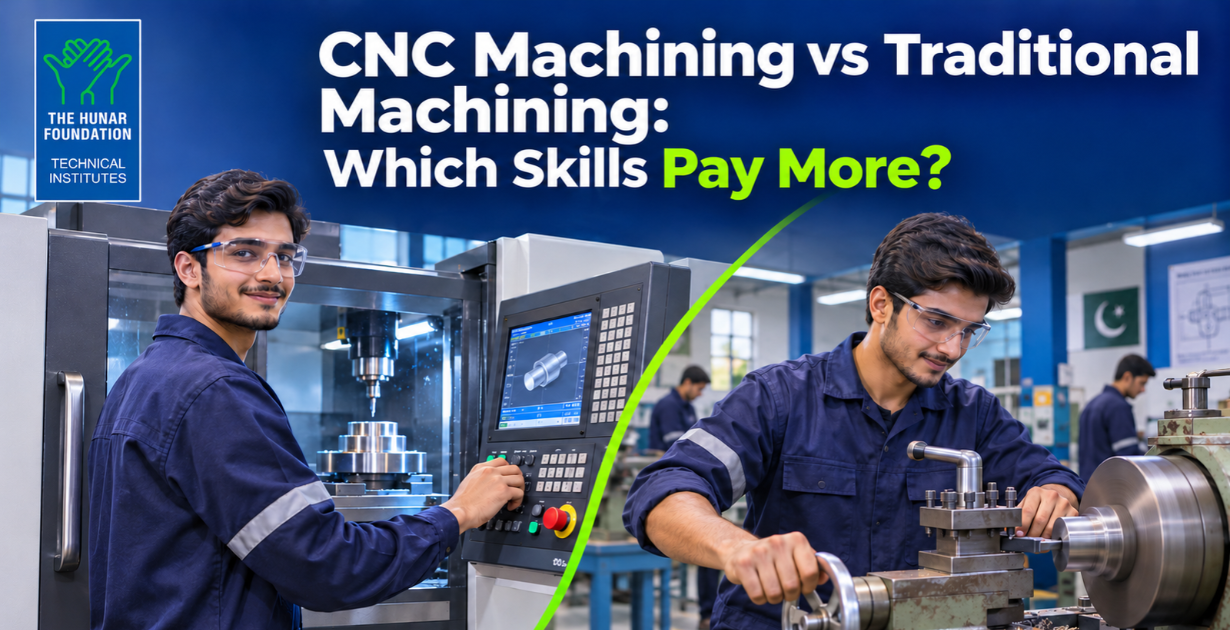
In 2026, CNC Machining skills in programming, multi-axis operations and automation can offer stronger earning potential than basic manual operation. However, traditional machining expertise remains valuable for repairs, custom components and specialised workshop jobs.
What Is a CNC Machine?
A CNC machine uses computer-controlled instructions to cut, drill, shape or finish materials with precision. Manufacturers use these machines to produce identical components, complex designs and parts that require consistent measurements.
Common Types of CNC Machines
- CNC lathes rotate material to produce shafts and other cylindrical parts.
- CNC mills use rotating cutters to make holes, slots and complex profiles.
- CNC routers cut wood, plastic and composites for furniture, panels and signs.
- CNC plasma cutters use a plasma arc to cut conductive metals such as steel.
How CNC Machining Works
CNC machining removes material from a workpiece using cutting tools controlled by a computer. The machine follows a programmed set of instructions to move the tool along specific paths, shaping the material into the required component. These instructions control the tool’s movement, speed and cutting depth to produce accurate and consistent results.
What Is a CNC Machinist?
Traditional machining uses manually operated equipment such as lathes, milling machines, drilling machines and grinders. The machinist controls tool movement through handwheels and levers instead of relying on a computer program. This work requires practical knowledge of materials, cutting techniques and measurements.
What Is Traditional (Conventional Machining)?
Traditional machining involves hand lathes, milling machines, drill presses and grinders. Machinists operate tools using handwheels and levers, acquiring creative understanding of materials, alignment and measurement.
How Manual Machines Are Operated
Manual machines move the cutting tool or work piece during production manually by mechanical means. A lathe, for instance, moves the material against a cutting tool, while a milling machine applies a rotating cutter to shape the material, and a drilling machine drills holes into the material using a rotating drill bit.
Where Conventional Machining Still Wins
Manual machining is still valuable for jobs where flexibility is required, and not repetition.
- Repairs: Workshops can alter or fix worn parts without developing a complete CNC program.
- One-off parts: A machinist can produce a single custom component without spending extensive time on programming and setup.
- Toolrooms: Manual machines support tool adjustments, fitting, prototype work and specialised modifications.
For these jobs, practical judgement and quick setup can matter more than automation.
CNC Machining vs Traditional Machining: Key Differences
| Factor | CNC | Traditional |
|---|---|---|
| Precision | Repeatable with correct setup | Depends on operator control |
| Speed | Efficient for repeated, complex parts | Useful for simple, one-off jobs |
| Setup | Programming and tooling take preparation | Simple jobs may need less setup |
| Skills | Programming, offsets and inspection | Manual control and measurement |
| Scalability | Repeats programs across batches | Relies more on operator consistency |
| Cost | Higher equipment investment | Basic machines can cost less |
| Job demand | Precision and automated production | Repair, maintenance and toolrooms |
The right method depends on component complexity, production volume, accuracy requirements and available equipment.
CNC Machining Skills That Employers Want in 2026
Employers look for machinists who can operate equipment safely, understand technical instructions and maintain production quality. The following abilities can improve employability and support progression into specialised roles.
Technical Skills
Important technical abilities include:
- Programming: Understand G-code and machine instructions to operate equipment accurately.
- CAD/CAM: Read digital designs and understand how software converts them into cutting paths.
- Tooling: Select suitable cutters, workholding equipment, speeds and feed rates.
- Blueprint reading: Interpret dimensions, tolerances, symbols and engineering drawings before production.
Traditional (Manual) Machining Skills
Manual workshop knowledge helps machinists understand how cutting operations affect materials and finished components. Important skills include:
- Operating manual lathes, milling machines and drilling equipment.
- Performing turning, drilling, grinding and basic cutting operations.
- Measuring components with vernier calipers and micrometers.
- Understanding tool wear, surface finish and material behaviour.
- Aligning workpieces and maintaining accurate dimensions.
Soft Skills
Technical ability alone does not guarantee reliable production. Employers also value these workplace skills:
- Problem-solving: Identify the cause of defects, unusual machine sounds or inconsistent measurements. Find practical solutions without compromising safety.
- Attention to detail: Check dimensions, tolerances, tool settings and finished surfaces to prevent errors and material waste.
- Time management: Organise machine tasks, prepare tools in advance and meet production deadlines without skipping inspection procedures.
What Type of Machinist Makes the Most Money?
Machinists with advanced technical responsibilities can access better career opportunities than entry-level machine operators. Programming, complex machine setup, automation and quality control can increase professional value. Actual earnings depend on experience, industry, employer, and location.
Highest-Paying Machinist Specializations
- Multi-axis machinists: Operate advanced machines that produce complex components from different angles.
- CAM programmers: Develop efficient tool paths and programmes for manufacturing operations.
- Automation specialists: Work with automated production systems and connected machinery.
- Quality inspectors: Use precision instruments to verify dimensions and ensure components meet specifications.
How Industry and Location Affect Machinist Salaries
In Pakistan, machining opportunities exist across automotive, engineering, metalworking and manufacturing businesses. Salaries depend on the complexity of the work assigned, employer demand, and industrial activity.
For example, Indeed Pakistan reported an average CNC operator salary of PKR 40,000 per month in October 2026, based on 45 reported salaries. Experienced programmers and specialised machinists may earn differently.
CNC Machining Course: How to Get Started
Well-designed vocational training can help beginners build workshop skills. When choosing training courses for a machine, consider supervised machine practice, safety training, measurement exercises, and recognised assessment.
What You Will Learn
A relevant programs should introduce learners to:
- Machine components and safe operating procedures.
- Engineering drawings and measurement instruments.
- Workpiece positioning, cutting tools and machine setup.
- Basic programming and machine operation.
- Inspection, maintenance and quality checks.
Understanding the importance of CNC machining also helps learners recognise how accurate production supports modern manufacturing.
Course Duration and Certification
If you’re looking for a CNC machine operator course in Karachi, The Hunar Foundation (THF) offers a CNC Machinist Level 4 program with six months of training across eight modules. The 26-week program combines on-campus instruction with hands-on practice and offers flexible morning and afternoon shifts.
Applicants must have an NVCL-2 Machinist qualification or intermediate-level education. The curriculum covers CNC lathe, milling, and EDM wire-cut operations; technical drawings, precision measurement; machine maintenance; troubleshooting; and workplace safety.
Upon successful completion, students receive:
- NUTECH Board of Technical and Professional Education (NBTPE) Certificate
- The Hunar Foundation (THF) In-house Certificate
FAQs
A: CNC machining uses computer-controlled instructions to move cutting tools and shape materials, while traditional machining relies on manual machine controls. CNC suits precise, repeatable production, whereas conventional machining is useful for repairs, custom parts and small batches.
A: Yes, skilled CNC machinists often earn more than manual machinists due to their programming, CAD/CAM and machine setup skills. In Pakistan, salaries depend on experience, technical expertise, industry and employer.