
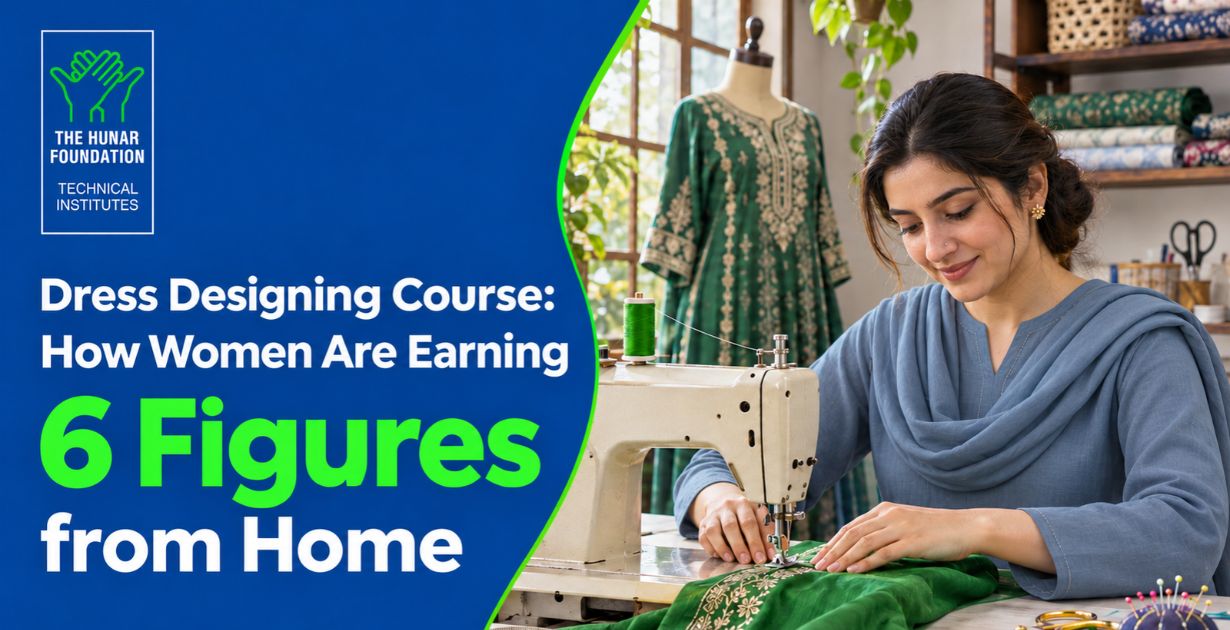
A dress designing course can help women in Pakistan learn to design and stitch clothes, start a home-based clothing business, and earn through custom outfits and made-to-order orders. For example, a woman who can turn a customer’s Eid outfit idea into a finished dress can offer customized clothing services and build a regular customer base from home.
At The Hunar Foundation (THF), we believe practical garment-making skills can help women develop the confidence to turn their creativity into an income-generating opportunity.
How Can Women Earn Money From Dress Designing at Home?
A home-based business doesn’t need to start with a full clothing collection. Start with services you can deliver using your current skills and equipment, then expand as demand grows.
Start a Custom Dress Designing Business
Create outfits according to customers’ preferred styles, measurements, fabrics, and budgets. You can specialize in everyday shalwar kameez, kurtis, festive wear, or children’s clothing. Keep sample designs ready to show your finishing and stitching quality.
Stitch and Sell Made-to-Order Outfits
Don’t buy fabric before orders are confirmed. This will help to minimize excess inventory and manage costs. Before work begins, agree on the design, price, advance payment and delivery date.
Design Clothes for Local Boutiques
Visit local shops looking for sample development, stitching or small-batch production assistance. Show photos of the work you’ve done and explain what is needed. If you consistently deliver quality work on time, you may start receiving regular orders.
Sell Designs Through Social Media
Use Instagram, Facebook, and WhatsApp Business to display your outfits. Provide clear photos, fabric details, pricing, and ordering information. Potential customers can see your designs and finishing through videos, which makes them more aware of your work.
Offer Alteration and Customization Services
Alterations can bring regular orders while you develop more complex designs. Learn how to earn by making sleeve adjustments, trouser adjustments, zips, neckline changes, and fit corrections. Set clear pricing for each service so customers know what to expect.
How Do You Become a Dress Designer?
You do not need to launch a clothing label immediately. Build your skills, practise on manageable projects, and gradually start accepting paid orders.
Learn Basic Designing and Stitching at THF
At THF, we offer practical training through our Dressmaking Level 2 and Fashion Designing Level 3 courses. These programs offer learning pathways for women interested in creating and designing garments. Our technical courses focus on hands-on experience and engage students to help them build skills they can take beyond the classroom.
Build a Portfolio of Finished Designs
Create samples of your skills, including everyday wear, sleeve and neckline choices, festive wear, and alterations. Take clear photographs of each piece, and note the materials and techniques used.
Choose a Niche and Set Up Your Home Studio
Determine whether you want to serve working women, students, families or those in search of festive attire. Set up a clean work area with a sewing machine, measuring tape, fabric scissors, cutting surface, iron, and fabric storage. Add more equipment as orders come in.
Get Your First Paying Customers
Start with a small group of customers in your circle and network. Double-check measurements and design before stitching. Ask satisfied customers for feedback and permission to share photographs of their outfits.
What Skills Do You Need to Earn Through Fashion Designing?
A good-looking sketch is only one part of garment creation. Customers expect an outfit that fits properly, feels comfortable, and matches the agreed design.
-
Fabric Selection and Understanding Textiles
Learn how cotton, lawn, linen, chiffon, silk, and khaddar behave during cutting and stitching. Consider fabric weight, stretch, transparency, and drape before recommending a material.
-
Taking Measurements and Creating Patterns
Correct measurements minimise fitting issues and fabric waste. Learn how to measure shoulders, chest, waist, sleeves, and garment length. Use these measurements in pattern making to create the correct shape of garment pieces.
-
Cutting, Stitching, and Garment Construction
Practise fabric layout, grain alignment, seam allowances, hemming, and finishing. Check seams and fitting before delivery. Neat finishing inside the garment matters as much as its appearance.
-
Color Coordination and Design Sense
Understand how colors, prints, textures, and embellishments work together. Consider the customer’s preferences, occasion, and comfort when developing a design.
-
Pricing, Customer Service, and Order Management
Keep records of measurements, approved designs, payments, material costs, and delivery dates. Discuss any changes with customers before proceeding to avoid misunderstandings.
Why enroll in a dress designing course?
Learning through trial and error can waste fabric, time, and money. Structured training gives learners a foundation to practice techniques in a planned sequence.
Learn Practical Garment-Making Skills
Training helps learners understand tools, materials, measurements, and construction methods. THF’s Dress Making and Fashion Designing programs offer relevant pathways to develop garment-related skills.
Understand the Process From Design to Finished Outfit
Creating a garment requires choosing the fabric, making a pattern, cutting accurately, stitching, and ensuring that it fits properly. If you understand each stage, you will find it easier to create a better finished outfit.
Gain the Confidence to Work Independently From Home
Practical training gives learners a foundation for discussing designs, accepting orders, and estimating the work involved. You can begin with simple garments and expand your services as you gain experience.
Cloth-designing course vs. fashion-designing course: Which one suits you?
A cloth-focused program may cover textiles, fabric selection, or surface design. A broader garment-design program may include clothing concepts, patterns, and construction. Compare the actual syllabus and practical training before enrolling.
Fashion designing courses in Karachi: What Should You Look For?
Compare institutes based on practical training, course content, trainer experience, equipment, and opportunities to make complete garments. Ask about duration, eligibility, fees, and certification. At THF, interested learners can explore our Dress Making Level 2 and Fashion Designing Level 3 programs and contact admissions for current details.
How Can a Dress-Designing Business Earn Six Figures?
Six-figure monthly earnings depend on customer demand, completed orders, pricing, and expenses. Building a sustainable business requires attention to a few essentials:
-
Set Prices That Cover Costs and Profit
Include fabric, thread, buttons, lining, embellishments, electricity, packaging, and delivery in your calculations. Also account for your time and skill. Remember, revenue is not profit.
-
Promote Your Designs on Social Media
Provide simple images, value, customization, and delivery information. If you have permission, use customer feedback to build trust.
-
Manage Orders and Deadlines Without Delays
Maintain an order register with customer details, measurements, payments, material requirements, and delivery dates. Accept only the orders you can complete on time.
-
Turn First-Time Buyers Into Repeat Customers
Remember customer preferences, keep measurement records, and ask for feedback after delivery. Seasonal collections before Eid and wedding periods can encourage repeat orders.
A simple earning example: If you complete 30 orders per month and, after direct production costs, you earn PKR 4000 per order, you will earn PKR 120,000 per month. If operating expenses are PKR 20,000, you will still have PKR 100,000 left after covering them. These are estimated figures, not fixed income. Actual earnings will vary according to pricing, costs, workload, and demand.
Conclusion
Anyone can start a clothing business from home with practical skills, a sewing machine, and a few customers. By learning, maintaining consistent quality, and managing it well, women can gradually make garment making an independent livelihood. At THF, we encourage women to explore vocational training and develop skills that support their professional and financial goals.
FAQs
A: A dress designing course in Pakistan teaches students to take measurements, select fabrics, create patterns, cut material, stitch garments, and finish outfits for personal or professional clothing work.
A: To become a dress designer with no experience, enroll in beginner training, practice basic stitching and pattern-making, create sample outfits, and build a portfolio before confidently accepting customer orders.
A: A fashion designing course usually covers broader garment concepts, styling, and clothing construction, while a cloth designing course may focus more specifically on textile patterns, prints, and fabric development techniques.