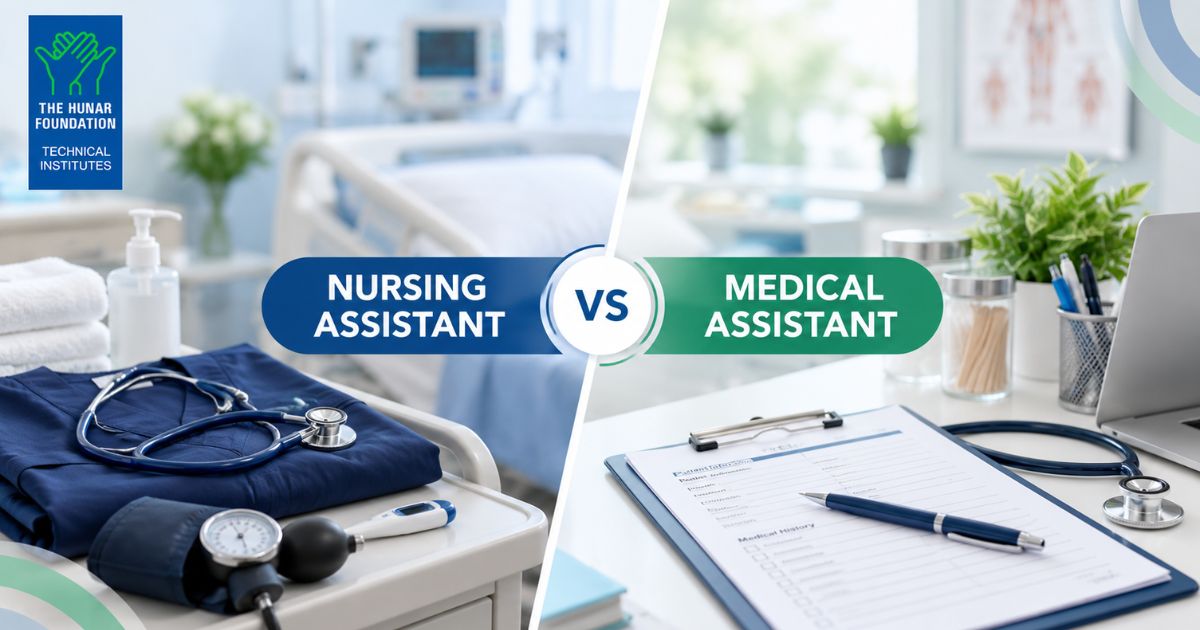
A healthcare career can begin with a real decision: do you want to spend most of your day caring directly for patients, or do you want to combine patient support with clinical and administrative work? Understanding nursing assistant vs. medical assistant can help students choose training that matches their interests, strengths, and long-term goals.
At THF, we believe students should understand what a career actually looks like before choosing a training path. So, let’s break down both roles in simple terms, compare their responsibilities, and help you see which one may fit your interests and career goals.
Who Is a Nursing Assistant (NA)?
They provide hands-on support to patients under the direction of nursing staff. The responsibility is focused on the daily needs of patients, comfort, hygiene, mobility and basic observations.
Typical responsibilities include:
- Helping patients bathe, dress, eat, and use the toilet
- Assisting with movement and repositioning
- Assessing basic vital signs
- Assessing patients’ clinical status and reporting issues
- Maintaining cleanliness, comfort, and safe patient care.
In Pakistan, students should also understand that job titles and scopes can differ by employer and qualification. PNMC lists Certified Nursing Assistant as a regulated nursing category.
Who Is a Medical Assistant (MA)?
They generally perform a combination of clinical and administrative duties. This may include taking vital signs, recording medical histories, preparing patients for examinations, keeping records, making appointments and assisting physicians, among other duties, depending on the workplace and rules that apply.
The role therefore extends beyond direct patient care. A MA moves between examination rooms, patient records, reception tasks, and other clinical support activities. The BLS confirms that they commonly handle both administrative and clinical responsibilities.
Nursing Assistant vs Medical Assistant: Key Differences
Job Responsibilities
The main difference becomes clearer when you look at the daily workflow.
Nursing assistants mainly provide hands-on patient care, including hygiene, mobility, comfort, and basic vital signs.
Medical assistants combine patient care with clinical and administrative tasks, such as taking patient information, preparing patients for examinations, maintaining records, and scheduling appointments.
Exact responsibilities depend on training, employer, and local regulations.
Type of Patient Care
NA usually have more frequent hands-on contact with patients who need assistance with everyday activities. This is especially true in hospitals, residential care, and other settings where patients need ongoing support.
MA also interacts with patients, but their contact often relates to appointments, examinations, procedures, records, and follow-up. Their role can therefore shift between patient-facing and administrative work.
Clinical vs Administrative Duties
The ma vs cna distinction is particularly useful here. Generally, a CNA role involves basic nursing skills, while medical assisting is more likely to include a mix of clinical and administrative tasks.
Work Environment
NAs typically work in hospitals, nursing homes, or residential care and similar settings. Some jobs involve significant movement and physical support, while others may require working nights, weekends, and/or holidays.
MAs often work in physicians’ offices, outpatient clinics, hospitals, and other healthcare facilities. Some spend much of their day with patients, while others divide their time between clinical areas and administrative work.
Education and Training
Training requirements vary according to the country, employer, and qualification.
In Pakistan, students should verify whether a programme is recognized and whether its qualification meets the requirements of the jobs they want. PNMC publishes requirements for its CNA programme, while NAVTTC offers a Nursing Aid course with practical training and NVQF certification.
Medical assisting has no single training route across Pakistan. Therefore, students should research the curriculum quality, practical exposure, certification, and employer acceptance before enrolling.
Career Growth
NAs build a strong foundation in patient care and can pursue further healthcare education if they meet the relevant admission requirements.
MAs gain experience across clinical and administrative functions and develop specialized skills according to workplace opportunities.
Nursing Assistant vs Medical Assistant Salary
In Pakistan, salaries for these roles can vary based on experience, qualification, location, employer, and job responsibilities.
| Role | Indicative Monthly Salary in Pakistan |
|---|---|
| Nursing Assistant | Rs. 20,000–74,000 |
| Medical Assistant | Rs. 32,000–100,000+ |
Which Career Is Right for You?
Consider two students entering healthcare training. One feels most comfortable helping a patient move safely, monitoring basic needs, and providing reassurance. The other values preparing patients for consultations, organizing information, and helping a clinic stay on schedule.
They both can have a career in health care, but they both would like to do different things every day.
Before choosing a course, compare the qualification, practical training, recognition, entry requirements, employer expectations, and progression opportunities. This gives you a clearer picture than comparing job titles or salaries alone.
Healthcare Training at THF
At The Hunar Foundation, our basic nursing assistant training focuses on practical skills students can use in healthcare settings. Students develop skills in patient care, hygiene, vital signs, safety, communication, and helping nursing staff.
Practical training is important for students considering this career. Learning to approach patients with respect, practice hygiene, notice minor changes, and work safely as part of a healthcare team can help prepare them for real-world situations. Students can explore THF’s admissions and available programmes to find a suitable training path.
Conclusion
If you’re considering a career in Pakistan, don’t choose a job title alone. Check the training provider, qualification, practical learning, recognition, employer requirements, and opportunities available in your area. Training options that align with your interests and career goals can help you get a better start in the health care profession.
FAQs
A: No, they are not the same. A medical assistant works mainly in clinics and physician’s offices, handling both administrative tasks and basic clinical tasks. A nursing assistant, also called a CNA, works mainly in hospitals or care facilities, providing direct hands-on patient car, such as bathing, feeding, and monitoring patients.
A: The main difference is the type of work and the setting. MAs handle both administrative and clinical tasks in clinics, while NAs focus solely on hands-on patient care in hospitals or care facilities. NA training is also generally shorter.