Many people often mix up digital and online marketing, assuming they are the same thing. In reality, they are closely related but not identical. Understanding this difference is important for students, job seekers, and even business owners who want to make better decisions in today’s digital world.
In Pakistan, this understanding matters even more because businesses are rapidly shifting toward digital platforms. As a result, new job opportunities are opening up every day. The Hunar Foundation plays a key role here by equipping young people with practical skills that help them step into real careers, support their families, and contribute to the economy.
Let’s break everything down in a simple and clear way.
What is Digital Marketing?
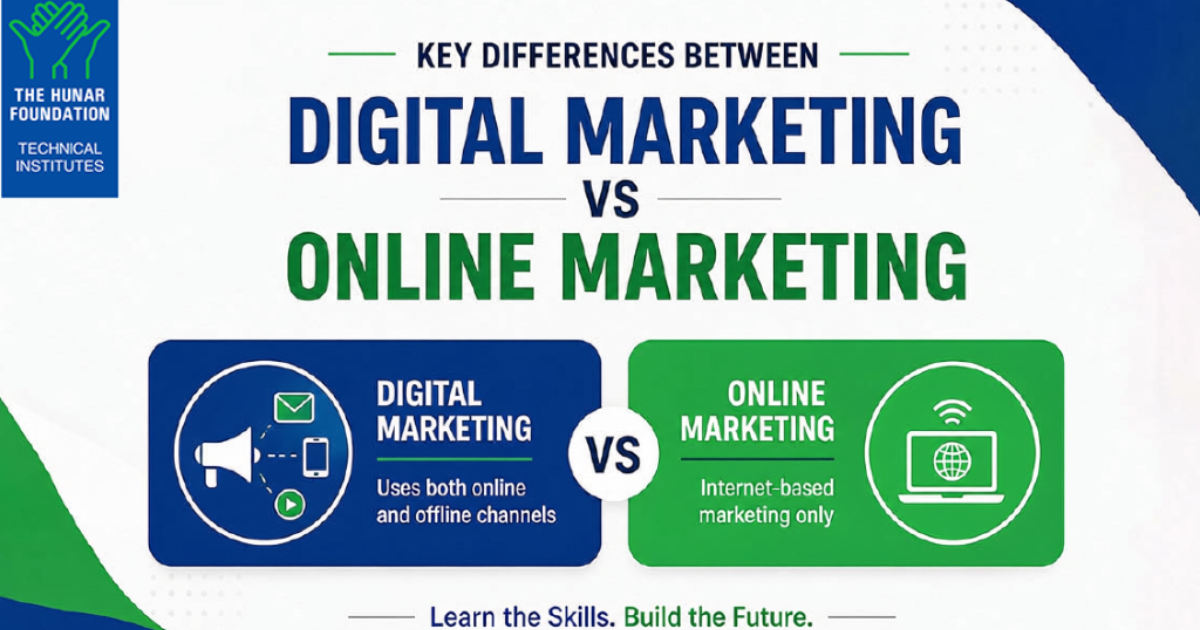
Digital marketing refers to promoting products or services using any form of digital technology. It includes both online and offline methods, which makes it a broad concept.
For example, a brand may run ads on Instagram, send SMS promotions, appear on Google search results, and also display ads on digital screens in malls or even TV commercials. All of these fall under digital marketing.
The main goal is simple: reach people through digital tools, understand their behavior, and improve campaigns using data.
In simple words, if marketing uses a digital device or screen, it falls under digital marketing, even if the internet is not involved.
In Pakistan, this field is growing quickly. More businesses are moving toward digital platforms to reach customers. This is increasing the digital marketing scope in Pakistan, especially for young professionals who want career opportunities in this field.
The Hunar Foundation supports this growth by training students with practical skills. Learners get exposure to real-world tools and techniques that help them become job-ready in the marketing industry.
What is Online Marketing?
Online marketing is a part of digital marketing that works only through the internet. It does not include offline methods like TV ads or SMS campaigns.
It uses platforms such as Google, social media, websites, and email to promote products or services. For example, when you see a sponsored post on Instagram or an ad at the top of Google search results, that is online marketing.
The main purpose is to reach users online and encourage them to take action, such as clicking a link, signing up, or making a purchase.
One of the biggest advantages of online marketing is that everything can be tracked. Businesses can see how many people clicked an ad, visited a website, or completed a purchase. This makes it easier to improve results in real time.
Online marketing is widely used by e-commerce brands, startups, and service-based companies because it is cost-effective and easy to measure.
Students at The Hunar Foundation also learn how to do digital marketing, including online tools and platforms that are used in real jobs.
Key Differences Between Digital and Online Marketing
Scope of Marketing
Digital marketing has a wider scope because it includes both online and offline digital channels. It covers everything from social media ads to TV commercials and digital billboards.
Online marketing has a narrower scope because it only includes internet-based platforms like websites, search engines, and social media.
Channels Used
Digital marketing uses multiple channels such as TV ads, SMS marketing, mobile apps, websites, and social media platforms.
Online marketing only uses internet-based channels like Google ads, email campaigns, and social media advertising.
Audience Reach
Digital marketing can reach both online and offline audiences. For example, someone may see a digital billboard or TV ad without using the internet.
Online marketing only reaches people who are already active on the internet, making it more focused but limited in reach.
Tracking and Measurement
Online marketing is easier to track because businesses can measure clicks, impressions, and conversions instantly using tools like Google Analytics.
Digital marketing becomes harder to measure when offline channels are involved, such as TV or billboard advertising, where results are not directly trackable.
Cost and Flexibility
Digital marketing can become expensive when it includes traditional digital media like TV ads or large campaigns. It also takes more time to modify once launched.
Online marketing is more flexible and budget-friendly. Campaigns can be adjusted instantly based on performance, which makes it suitable for small and medium businesses.
Why This Matters for Youth in Pakistan
Understanding digital and online marketing is not just about learning terms. It is about opening doors to real opportunities.
As more businesses move online, the demand for skilled professionals continues to grow. Companies need people who understand how digital platforms work and how customers behave online.
The Hunar Foundation plays an important role in this journey. It trains young individuals with practical, job-oriented skills that prepare them for real work environments. Students learn how campaigns run, how content performs, and how marketing decisions are made in real time.
This training helps youth move toward employment, freelancing, and entrepreneurship. It also supports long-term economic growth by creating a skilled workforce in Pakistan.
Conclusion
Digital marketing is the broader system that includes both online and offline methods. Online marketing is a focused part of it that only works through the internet.