Pakistan’s industrial sector is expanding rapidly. While engineers and architects design projects, skilled welders help turn those designs into strong and reliable structures. That is why learning the skills needed to be a welder can lead to rewarding career opportunities.
It’s a technical trade, combining knowledge, physical control and safety. In addition, welding skills training can lead to a reliable job and even to owning a business.
The Hunar Foundation (THF) trains young Pakistanis for such careers and provides them with industry-recognized skills from day one.
Technical Welding Skills
All the successful welders begin by learning the basics. These technical skills allow you to produce work of a high standard that is accurate, reliable and meets industry standards.
Reading Blueprints and Technical Drawings
You must know what you’re building before you start welding. Measurements, welding symbols and assembly instructions are given on blueprints and technical drawings.
These drawings ensure a project is completed correctly and within the required specifications, while also preventing errors and ensuring proper positioning. This is one of the vital technical skills for welders since a small mistake can make a big difference in the finished product.
Knowledge of Welding Techniques (MIG, TIG, Arc, Gas)
Different projects require different skills. By understanding the various types of welding techniques, welders can select the appropriate process for the specific job they are performing.
For example:
- MIG welding is an appropriate choice for production and fabrication processes.
- TIG welding is more suitable for thin materials.
- Arc welding is frequently used in construction and maintenance applications.
- Gas welding is used for certain types of repairs and fabrication work.
The skills needed to be a welder include learning when and how to apply each technique safely and effectively.
Metal Fabrication and Cutting Skills
Welders often prepare materials before joining them together. This involves measuring, cutting, shaping, grinding and fitting metal components.
These skills are used to make sure that all parts fit together accurately before welding. This makes the final product stronger, safer and more durable.
Physical and Hands-On Skills
Technical knowledge alone is not enough. Practical skills such as accuracy and productivity are also essential for welding.
Precision, Steady Hands and Physical Stamina
A welder spends long hours focusing on detailed work. Maintaining steady hands and paying close attention to every weld helps create clean, consistent joints.
Physical stamina is also a good factor. Many projects require welders to stand for long periods of time, lift materials, or perform tasks in various positions. These traits assist in developing the skills needed to be a welder and prepare for the real work setting.
Operating Welding Tools and Equipment
A professional welder uses a number of machines and hand tools during the day. Knowing how to handle welding machines, grinders, measuring tools, clamps and cutting equipment safely enhances efficiency and quality.
At The Hunar Foundation, we help students gain hands-on practice using industry-standard equipment. This practical approach helps learners build confidence before entering the workforce.
Safety Skills Every Welder Must Know
Personal Protective Equipment (PPE) Practices
PPE reduces the risk of burns, eye injuries, electric shock and other workplace hazards.
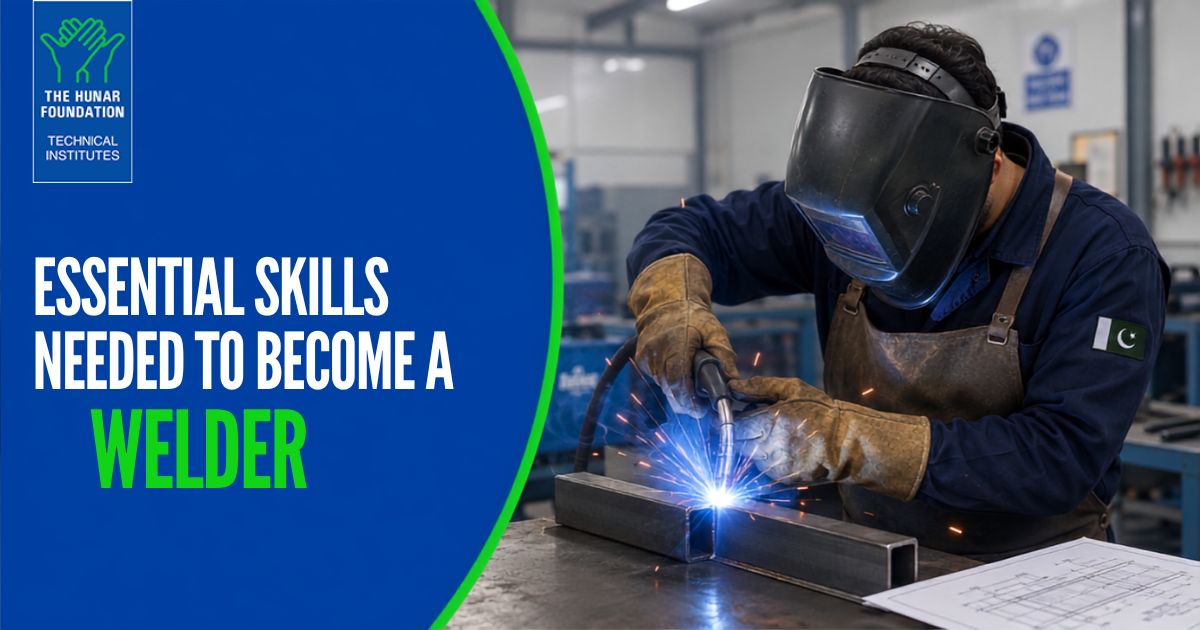
Essential equipment includes a helmet, safety gloves, protective clothing, safety boots, and eye protection. Developing strong welding safety skills means understanding not only what to wear but also when and how to use protective equipment correctly.
Handling Hazardous Materials and Fire Risks
Sparks, heat, and fumes are generated during welding and must be handled with care. All welders are required to know how to set up a safe workspace, what may cause a fire and what to do in case of an emergency.
At THF, we teach students to maintain safe work practices while using workplace tools, techniques and materials. These habits become valuable throughout a welder’s career.
Math and Measurement Skills
A good welder must be good with dimensions as well, since it can affect the entire project.
Basic geometry, measuring angles, calculating material requirements and estimating project needs all help welders produce quality work. These abilities support better planning, reduce material waste and improve overall efficiency.
Why Learn Welding Skills with THF?
Learning becomes more valuable when it matches industry expectations. That is exactly what we aim to provide through our six-month Welder course.
Students receive practical training, learning industry-accepted techniques through various workshops and hands-on projects on campus. The curriculum is aligned to national competency standards and leads to assessments that are recognized by employers.
Throughout the program, students will be able to:
- Learn welding procedure specifications
- Perform different welding processes
- Develop workplace safety habits
- Strengthen teamwork and time management
- Prepare for commercial work environments
After completing the welding course, students receive certificates from the NUTECH Board of Technical and Professional Education along with a THF in-house certificate.
Earning a recognized Welder certification in Pakistan supports graduates as they begin applying for jobs in different industries.
Career Opportunities After Welding Training
Graduates are eligible for careers in:
- Manufacturing industries
- Construction and infrastructure projects
- Fabrication workshops
- Automotive industry
- Shipbuilding and marine sector
- Oil and gas industry
- Self-employment and welding businesses
People with the right skills, continuous learning, and experience can create long-term careers and contribute to Pakistan’s booming industrial sector.
Conclusion
Welding is a combination of technical knowledge, practical skills and safe work practices in one rewarding career. By developing the right skills needed to be a welder, learners prepare themselves for careers across several industries.